

You’ve been showing up. Putting in the hours. Following the plan. But when you look for proof that it’s working—the weight loss, the skill improvement, the growing business—there’s… nothing. Just crickets and self-doubt.
Thank you for reading this post, don't forget to subscribe!Here’s the brutal truth: most people quit right here, in this exact moment of invisible progress. They’re three months away from their breakthrough, but they never find out because the silence feels too much like failure.
If you’re wondering how to keep going when you don’t see results, you’re not alone—and more importantly, you’re not doing anything wrong. The gap between effort and evidence is where dreams go to die, but it’s also where resilience is built.
In this post, I’m sharing 11 strategies that’ll help you push through the hardest phase of any goal: the messy middle where nothing seems to be happening. These aren’t just “think positive” platitudes—they’re practical tools for staying in the game when every fiber of your being wants to quit.
Because here’s what I know: your results are coming. They’re just not on your timeline yet.
Let’s talk about why that happens, and what you can actually do about it.
1. Why You’re Not Seeing Results Yet (And Why That’s Actually Normal)
Before we dive into how to keep going when you don’t see results, let’s address the elephant in the room: why the heck aren’t you seeing results yet?
It’s not because you’re doing it wrong. It’s not because you’re lazy or lack talent. And it’s definitely not because the universe has it out for you.
It’s because meaningful change takes time—way more time than Instagram success stories would have you believe.
There’s a brutal gap between when you start putting in effort and when you start seeing evidence of that effort. Scientists call this lag time. I call it the patience torture chamber. But understanding why it exists makes it a whole lot easier to endure.
The Gap Between Effort and Evidence
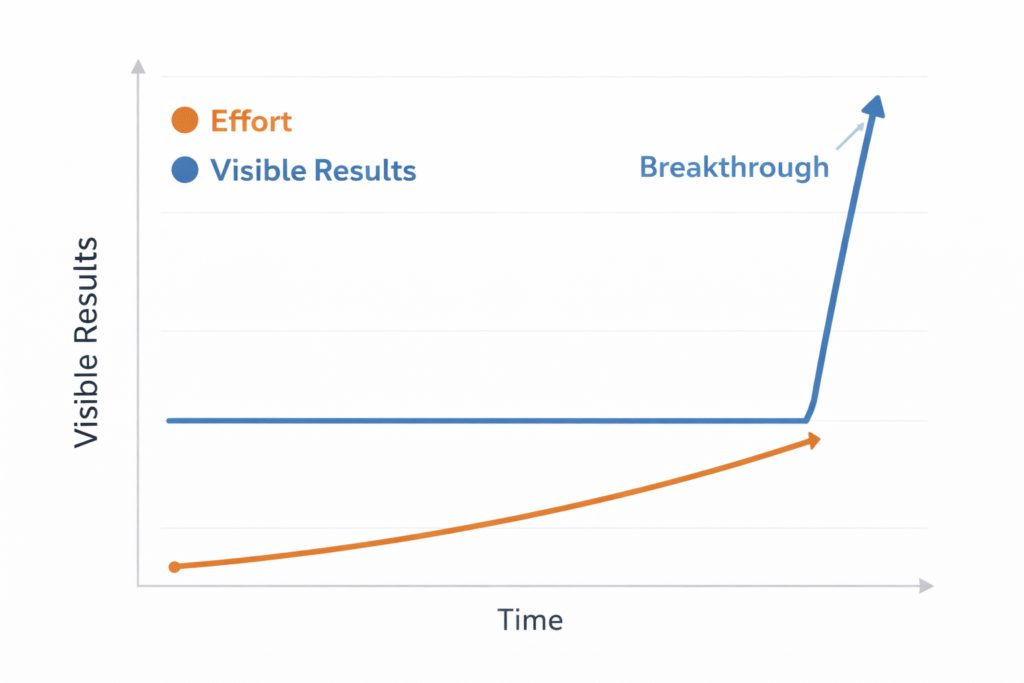
Think of it like this: you’re filling a bathtub with a leaky faucet. For the first hour, it looks empty. After two hours, still basically empty. You start wondering if the water is even running.
Then suddenly—seemingly out of nowhere—the tub is half full. Then it’s overflowing.
The water was always flowing. You just couldn’t see it accumulating.
This is exactly what happens with your goals. You’re doing the work—showing up at the gym, practicing the skill, building the business, studying for the exam. But the results are accumulating beneath the surface where you can’t see them yet.
Your muscles are getting stronger at the cellular level before they look different in the mirror. Your brain is forming new neural pathways before the skill feels natural. Your audience is growing one person at a time before it feels like “traction.”
James Clear calls this the “Plateau of Latent Potential.” It’s that frustrating phase where your effort is building up but hasn’t crossed the threshold into visible results. And here’s the kicker: this is where most people quit.
They’re literally three weeks, three months, or three reps away from the breakthrough—but they never find out because the silence feels too much like failure.
Common Timelines for Different Goals
Let’s get real about what “normal” actually looks like. If you’re wondering why am I not seeing results from my efforts, here’s some truth that might ease your mind:
Fitness & Body Changes:
- Noticeable strength gains: 4-6 weeks
- Visible muscle definition: 8-12 weeks
- Significant weight loss: 12-16 weeks
- Complete body transformation: 6-12 months
Skill Development:
- Basic competence: 20-40 hours of practice
- Noticeable improvement: 2-3 months of consistent practice
- Intermediate proficiency: 6-12 months
- Mastery: 5-10 years (yes, really)
Career & Business:
- Building credibility in new role: 3-6 months
- Side hustle gaining traction: 6-18 months
- Consistent income from new venture: 1-3 years
- Industry recognition: 5-10 years
Creative Work:
- Finding your voice as a writer: 100,000+ words written
- Building an engaged audience: 1-2 years of consistent content
- Getting “good” at your craft: hundreds of hours of practice
Notice a pattern? Everything worthwhile takes longer than you think it should.
And here’s what nobody tells you: even within these timelines, progress isn’t linear. You might see nothing for weeks, then suddenly notice changes happening fast. That’s normal. That’s actually how it works.
[CALL-OUT BOX:] “You’re not behind. You’re not broken. You’re just in the invisible growth phase that everyone goes through but nobody talks about.”
The Compound Effect Is Real (Even When It’s Invisible)
Here’s the beautiful—and frustrating—truth about dealing with slow progress in personal growth: small actions compound exponentially, but only after they reach a critical mass.
One workout doesn’t transform your body, but 100 workouts will. One blog post won’t build your audience, but 100 posts will. One sales call won’t make your business, but 100 calls will.
The problem? You’re probably at workout #23, post #15, or call #37. You’re in the accumulation phase. The compound interest hasn’t kicked in yet.
But it will. Math doesn’t lie.
Every rep you do is earning interest. Every page you write is compounding. Every conversation you have is adding up. You just can’t withdraw the gains yet—the account is still building.
This is why consistency beats intensity every single time. It’s not about the one heroic workout or the one perfect post. It’s about showing up repeatedly until the compound effect takes over.
So when someone asks “Is it normal to not see progress right away?” The answer is: yes, it’s completely normal. In fact, it’s basically guaranteed.
The invisible phase isn’t a sign you’re failing. It’s a sign you’re right on track.
Now that we’ve established why results are delayed, let’s talk about how to redefine what “results” even means—because you’re probably missing proof of progress that’s happening right now.
Focus on Systems, Not Just Goals
Here’s the problem with obsessing over results: goals are about the destination, but systems are about the journey. And when you’re stuck in the frustrating phase of how to keep going when you don’t see results, your system is the only thing that’ll save you.
Think about it this way: you don’t control when the weight comes off, when the promotion happens, or when your side hustle takes off. But you do control whether you show up to the gym today, send that pitch email, or practice for 30 minutes.
Goals tell you where you want to go. Systems get you there—even when the GPS seems broken.
Design Your Environment for Success
Stop relying on willpower alone. It’s a terrible long-term strategy.
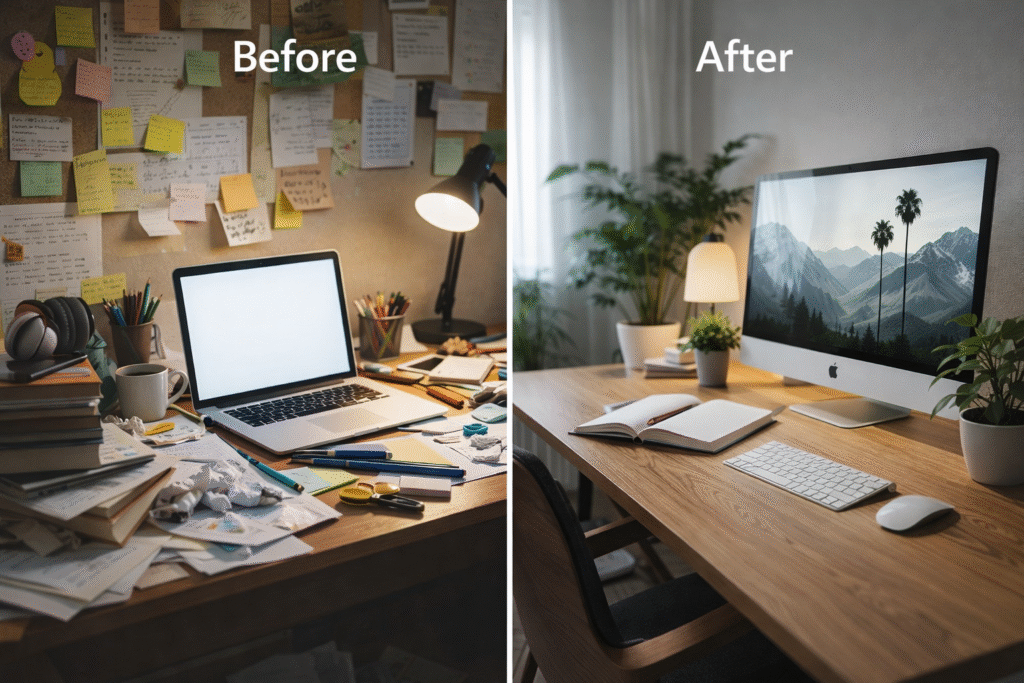
Instead, engineer your surroundings to make the right actions ridiculously easy and the wrong ones annoyingly hard. Want to write more? Leave your laptop open to a blank document. Trying to eat healthier? Put the junk food in the back of the highest cabinet (or better yet, don’t buy it).
Here’s what this looks like in practice:
- For fitness: Lay out your workout clothes the night before. Sleep in them if you have to.
- For learning: Delete social media apps from your phone during study hours. Make distraction require effort.
- For side projects: Set up a dedicated workspace that’s only for that work. Your brain will associate the space with productivity.
The easier you make good behavior and the harder you make bad behavior, the less staying motivated during slow progress depends on your mood.
The Two-Minute Rule for Momentum
When you don’t see results, even starting feels pointless. That’s where the two-minute rule becomes your secret weapon.
The idea is simple: scale down your desired action until it takes just two minutes. Want to run? Just put on your running shoes. Want to write? Just open the document. Want to practice guitar? Just pick it up.
Here’s the magic: momentum beats motivation every single time. Once you’re in your shoes, you’ll probably run. Once the document is open, you’ll probably write. The hard part isn’t doing the thing—it’s starting.
I use this constantly. On days when writing feels impossible, I tell myself, “Just write one terrible sentence.” Nine times out of ten, that one sentence turns into a paragraph, then a page. The other one time? At least I kept my streak alive.
Start so small you can’t say no. Then let physics take over.
[CALL-OUT BOX:] “Action isn’t just the effect of motivation—it’s also the cause of it.” Start tiny, and motivation will follow you into the work.
Schedule It, Don’t Rely on Motivation
Let me be blunt: if you’re waiting to “feel like it,” you’ve already lost.
Motivation is a feeling, and feelings are unreliable. Some days you’ll wake up fired up. Most days you’ll wake up… tired. That’s normal. That’s being human.
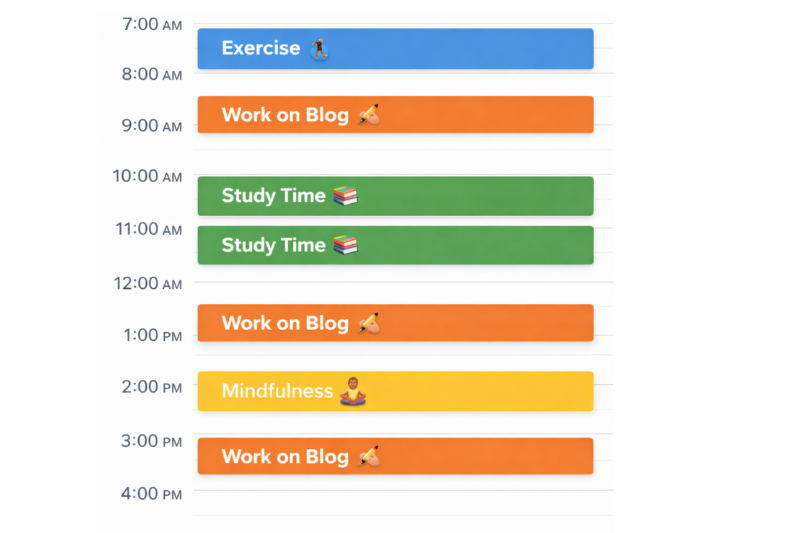
The solution? Treat your goal like a doctor’s appointment. You don’t skip those because you’re “not feeling it.” You go because it’s on the calendar.
Block specific time slots for your most important work. Not “I’ll work out sometime today.” Instead: “I’m at the gym Monday, Wednesday, Friday at 7 AM.” Not “I’ll work on my business when I have energy.” Instead: “9-10 PM is business hour, no exceptions.”
When how to stay consistent when motivation is low becomes your challenge, your calendar is your backbone. It removes the daily decision. You’re not asking “Should I?” You’re just doing what’s scheduled.
And here’s the beautiful part: the more you show up on schedule, the less you’ll need motivation at all. It just becomes what you do on Wednesdays.
The bottom line? You can’t control when results appear. But you can control your systems—and ironically, focusing on the process instead of the outcome is exactly what makes the outcome more likely.
Now, what happens when even solid systems feel pointless because you’re comparing yourself to people who seem miles ahead? Let’s tackle that next.
Practice Patience as a Skill
Most people think patience is something you either have or you don’t—like blue eyes or a good singing voice. But that’s not true. Patience is a skill, and like any skill, you can develop it with practice.
When you’re trying to figure out how to keep going when you don’t see results, impatience is your biggest enemy. It whispers that if it’s not happening fast, it’s not happening at all. It makes every day without visible progress feel like proof you’re failing.
But here’s what patience actually is: it’s the ability to stay present and keep working even when the future is uncertain. It’s not passive waiting—it’s active endurance.
The Waiting Well Practice
There’s a difference between waiting for something and waiting well.
Waiting for results means you’re constantly checking, measuring, getting frustrated when things haven’t changed. You’re living in the future, obsessing over when the breakthrough will come.
Waiting well means you’re fully engaged in today’s work while trusting that tomorrow’s results will come. You’re present, not anxious.
Here’s how to practice waiting well:
- Daily check-in: Each morning, ask yourself: “What’s the one thing I control today?” Then do that thing without worrying about outcomes.
- Mindful moments: When impatience hits, pause. Take three deep breaths. Remind yourself that growth is happening even when you can’t see it.
- Progress, not perfection: Focus on whether you showed up today, not whether you’ve “arrived” yet.
Think of it like planting a garden. You don’t dig up the seeds every day to check if they’re growing. You water them, give them sun, and trust the process. Your goals work the same way.
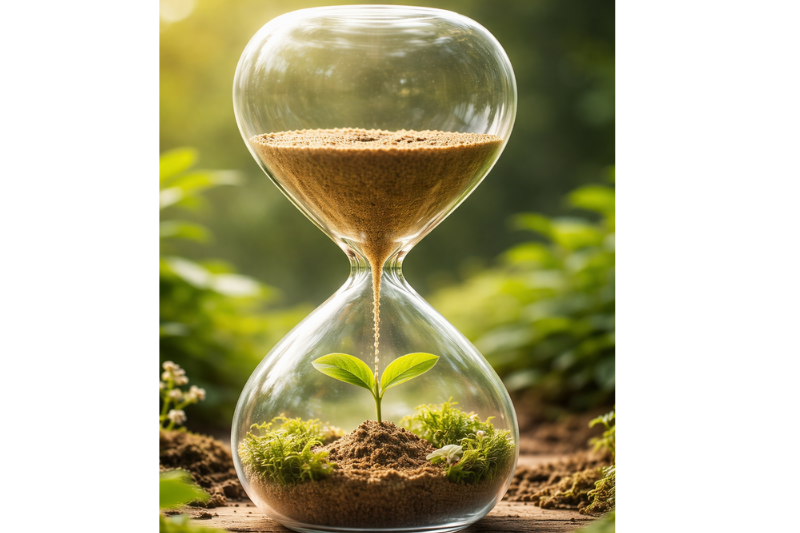
[CALL-OUT BOX:] “Patience isn’t about waiting for something to happen. It’s about how you behave while you’re waiting.”
Trust Your 累积 (Accumulation)
There’s a Chinese concept called 累积 (lěijī) that doesn’t translate perfectly to English, but it roughly means “gradual accumulation.” It’s the idea that small, seemingly insignificant efforts stack up invisibly until they suddenly become visible.
You can’t see the individual raindrops that fill a bucket, but eventually, it overflows. You can’t see the daily workouts rebuilding your muscles, but one day your jeans fit differently. You can’t see the hours of practice rewiring your brain, but suddenly the skill clicks.
This is what’s happening when you’re dealing with slow progress in personal growth. Your efforts aren’t disappearing into a void—they’re accumulating beneath the surface.
Every workout counts. Every page written counts. Every sales call counts. Not because each one produces visible results, but because they’re building the foundation for what comes next.
When you trust in 累积, you stop asking “When will I see results?” and start asking “Did I add to the pile today?” That shift in perspective changes everything.
Separate Anxiety from Action
Here’s a hard truth: your anxiety about results doesn’t speed them up. Not even a little bit.
Worrying about whether your business will succeed doesn’t make it succeed faster. Stressing about weight loss doesn’t burn extra calories. Obsessing over when you’ll get promoted doesn’t influence the timeline.
But here’s what anxiety does do: it drains the energy you need to keep taking action.
The practice of patience means learning to separate these two things:
- Taking consistent action (which you control and which matters)
- Worrying about outcomes (which you don’t control and which doesn’t help)
Try this: when anxiety about results creeps in, acknowledge it. Say to yourself, “That’s my brain trying to protect me from uncertainty. I hear you.” Then gently redirect your focus to what you’re doing right now.
Action and anxiety can’t occupy the same mental space. Choose action.
[PRACTICAL EXERCISE BOX:] 5-Minute Patience Practice for Goal-Setters
- Sit quietly and think about your goal
- Notice any impatient thoughts that arise (“Why isn’t this working yet?”)
- Without judgment, let those thoughts pass like clouds
- Return your focus to today: “What’s my next small step?”
- Take that step immediately
Do this whenever frustration peaks. It rewires your brain to focus on process over panic.
The truth is, patience isn’t about sitting still. It’s about continuing to move forward when every part of you wants to see proof that you’re not wasting your time. It’s about trusting that the invisible work is still real work.
And sometimes, when patience runs completely dry and you’re ready to throw in the towel? There are specific emergency tactics that can pull you back from the edge. Let’s talk about those next.